

Assess.Repair.Follow up. — Dr. Sepehr Rahimzadeh
General Surgeon, Laparoscopic and Hernia Surgery Tabriz
For hernias, gallstones and abdominal surgery. Every operation is different, and not every hernia is repaired by laparoscopy.
Assess first, then decide.
Dr. Sepehr Rahimzadeh is a general surgeon in Tabriz, working in laparoscopic and hernia surgery. Most people who come to a surgeon have a bulge, an ultrasound report in their hand, or have heard "you need an operation". This site helps you understand what the problem is, when surgery is needed and when it is not, and what to know before and after an operation.
More about the doctorWhat is worrying you?
Tap what you are facing to reach the right explanation. This list is not a diagnosis; it only takes you to the right page.
- A bulge in the groin
- A bulge around the navel
- A bulge over an old scar
- Gallstones on an ultrasound
- Upper abdominal pain after meals
- Pain in the lower right abdomen
- I was told I need surgery
- Laparoscopic or open surgery?
- Getting ready for surgery
- Caring for the wound
A hard, painful bulge that will not go back, especially with nausea or vomiting, can be a trapped hernia. That and sudden severe abdominal pain do not wait for an appointment: go to the emergency department or call 115. When should I act at once?
From hernias to the gallbladder, in plain language.
These pages explain what the problem is, when surgery is needed and how an operation generally goes. Your diagnosis and treatment are decided by the doctor after an examination.
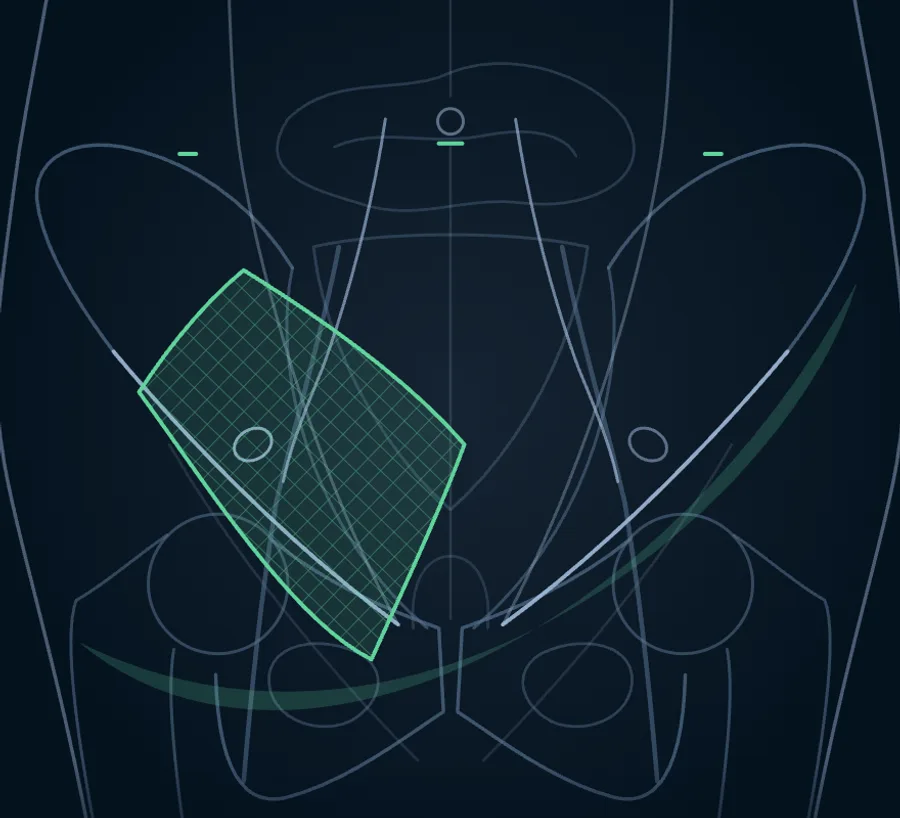
Groin (inguinal) hernia
A bulge in the groin that grows when you stand or cough and shrinks when you lie down. What a hernia is, when surgery is needed, how open and laparoscopic repair differ, and what the mesh does.
Read moreUmbilical, abdominal wall and incisional hernia
A bulge around the navel, on the midline of the abdomen or over an old scar. Why it happens and what the repair options are.
Read moreGallstones and gallbladder removal
Stones found on an ultrasound, or upper abdominal pain after meals. Which stones need surgery and what life is like without a gallbladder.
Read moreAppendicitis
Pain that starts around the navel and moves to the lower right of the abdomen. The signs, the tests, and why you should not wait.
Read moreSudden abdominal pain and abdominal injury
Severe sudden pain or a hard blow to the abdomen is not a reason to book a visit. This page says when to go to the emergency department.
Read more
From the first examination to follow-up after surgery
Not everyone who sees a surgeon needs an operation. We assess first and then decide together. At each step you know what comes next.
- Step 1 of 5.
Listening and examination
You are asked about your symptoms, earlier operations and medicines, and the painful place or the bulge is examined. Bring earlier results and reports.
- Step 2 of 5.
Tests, if they are needed
Many hernias are diagnosed by examination alone. An ultrasound, a blood test or a CT scan is asked for only where it helps the decision.
- Step 3 of 5.
Deciding together
You go through the options together: watching and waiting, open or laparoscopic surgery, and the risks and benefits of each in your situation.
- Step 4 of 5.
Surgery, if it is needed
Before the operation you know when to stop eating, which medicines to adjust with your doctor, and what kind of anaesthesia you will have. Every operation is different.
- Step 5 of 5.
Care after surgery and follow-up
You know how to look after the wound, when you can lift again and when your next visit is. Fever, a discharging wound or worsening pain do not wait for that visit.
With you through every stage of diagnosis, treatment and follow-up.
From dressing changes and stitch removal to imaging, the lab, the pharmacy, referrals and services at home.
Care after surgery
The support team arranges the appointment.
- Dressing changes
- Injections at home
- Drain removal
- Stitch removal
- Oedema bandaging
- Pressure sores
Medical imaging and ultrasound
Specialist ultrasound, CT scan, MRI and PET scan.
Medical diagnostic laboratory
Quick appointments and quick results.
Pharmacy and specialty medicines
You write the name of the pharmacy on the form.
Referral to specialists and sub-specialists
You write the name of the doctor or the specialty you want on the form.
Rehabilitation and wellbeing
Quick appointments and referral to rehabilitation and wellbeing specialists, arranged by the support team.
Treatment and rehabilitation at home
Specialist treatment and rehabilitation services at home.
Where the form says "free", that service is free.
Simple answers to the first questions.
Is this bulge a hernia?
A hernia means part of what is inside the abdomen pushes out through a weak spot in the wall. The bulge usually grows when you stand, cough or strain and shrinks when you lie down. Not every bulge is a hernia, and the diagnosis comes from an examination.
Will a hernia heal by itself?
A hernia in an adult does not close by itself and may grow over time. That does not always mean surgery at once. Some small hernias without symptoms can be watched, and that decision is made after an examination.
Does a truss help?
A truss does not treat a hernia and is not usually recommended. If you use one or are thinking of it, mention it at your visit.
Is laparoscopy better than open surgery?
Both are established methods and neither is better for everyone. The type of hernia, earlier operations, other illnesses and the type of anaesthesia all play a part. Laparoscopy uses smaller cuts but usually needs general anaesthesia.
What is mesh, and will my body reject it?
Mesh is a thin medical net that strengthens the weak spot in the wall, and it is used in most adult hernia repairs. The body usually accepts it. Complications such as infection or long-lasting pain are uncommon, but they happen and should be discussed before surgery.
Do gallstones without pain need surgery?
For most people with stones and no symptoms, surgery is not needed. If stones have caused pain or a complication, removing the gallbladder is usually advised. The doctor weighs special situations after seeing your results.
What can I eat without a gallbladder?
The liver keeps making bile, and most people eat normally after surgery. Some have bloating or diarrhoea with fatty food in the first weeks. This gets better in most people; if it continues, talk to your doctor.
When can I go back to work?
It depends on the operation, the method and your job. Desk work is usually possible sooner than work with heavy lifting. Your doctor will give you your own time after surgery.
Should I stop my blood thinner before surgery?
Do not stop it yourself. Bring a list of all your medicines to the visit so the doctor, and if needed the doctor who prescribed it, can tell you what to do.
When should I go to the emergency department at once?
A hard, painful bulge that will not go back, sudden severe abdominal pain, repeated vomiting with bloating and no passing of wind or stool, abdominal pain with fever and chills or jaundice, and a hard blow to the abdomen do not wait for an appointment. Call 115. The full list is in the patient guide.
Which operations are done by laparoscopy?
This will be announced once the doctor has confirmed it.
Do you work with insurance?
The list of contracted insurers will be announced soon.
In which hospital is surgery done?
This will be announced once the doctor has confirmed it.
These answers are general and do not replace a doctor's view of your situation.
The first step is a calm examination.
Go to the booking page or talk to the support team. Either way, we are here with you.
Support number